



Manufacturing Process
1. Sheet extrusion
The Process
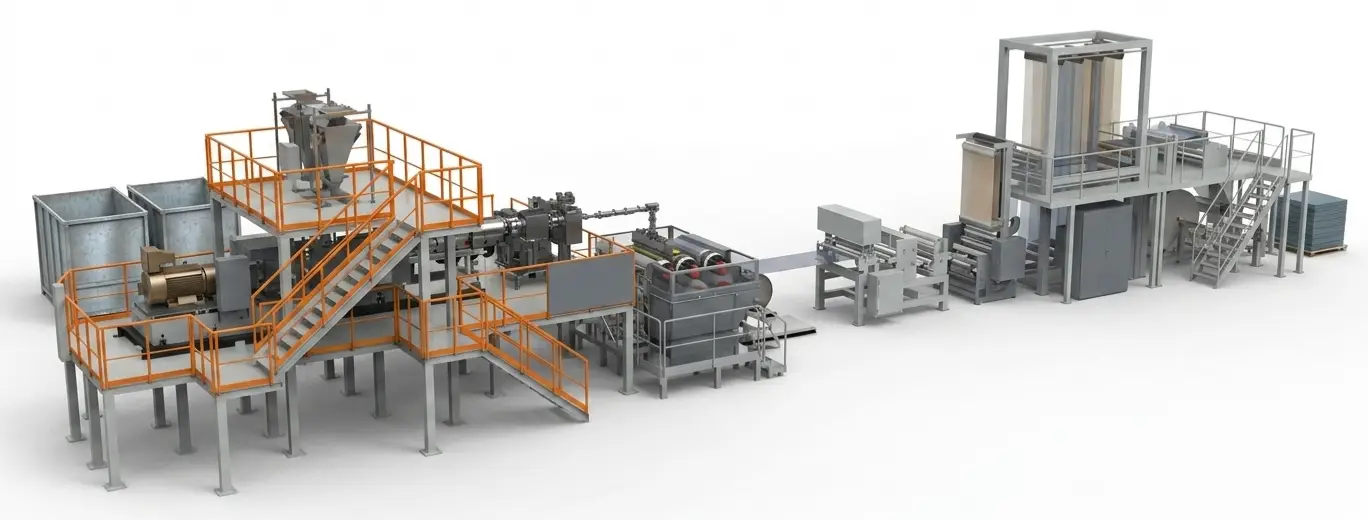
Raw plastic resin (PS, PP or PET) in pellet form is fed into an extruder, where a rotating screw melt and homogenize it at controlled temperatures. The molten polymer is then forced through a die shaped as a wide, narrow slit die, which distributes the melt evenly across the desired width.
The emerging hot sheet passes through a series of polished, temperature-controlled rollers that:
- Cool and solidify the sheet rapidly
- Set its final thickness
Finally, the sheet travels through thickness gauges for quality monitoring, gets trimmed to width, and is wound onto rolls.
2. Vacuum thermoforming
The Process
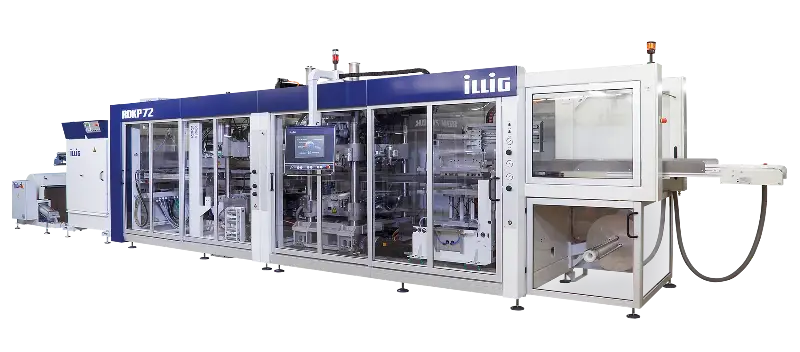
It begins with a plastic sheet produced via extrusion clamped in a frame. The sheet is heated uniformly with infrared heaters, until it reaches a pliable "softening" temperature (around 150–180°C for most polymers like ABS, PS, PET, PP, or PVC).
Once softened, the sheet is formed into a mold:
- Compressed air is applied above the sheet to force it into the mold
- A male and female mold press together to squeeze the sheet between them
After cooling in the mold (aided by water channels), the formed part is cut, stacked and ejected.